Shelf Life | Jesse Roman | Runtime: 40 Minutes | Genre: Thriller
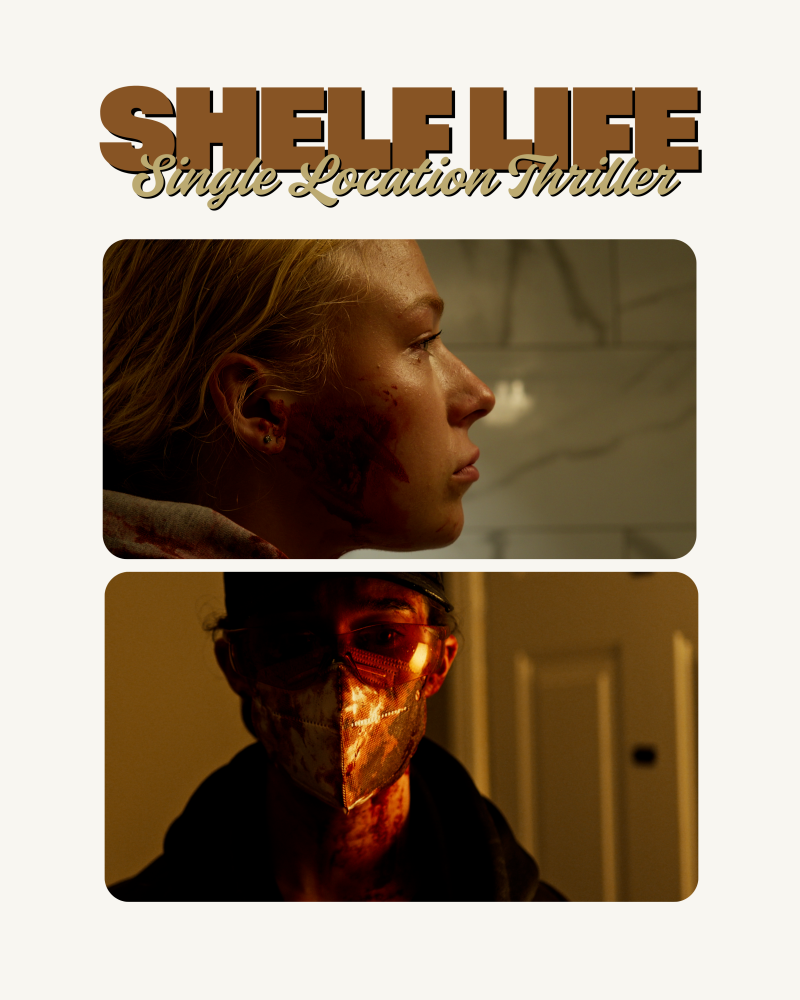
Logline:Three fierce friends, one dingy motel room, and a bloody hammer. When a toxic romance ends in a desperate homicide, outrunning the law becomes the least of their problems—because Rookie’s broken heart has literally stopped beating. 💔🔨
"I wish you'd stay on me the way scars do. I wish you'd stay like the thoughts I make of you in my mind. But they're not real. And that's not fair because in my head you say you love me. I waited too long and now you'll never say it. I hate myself for not saying "I love you." Now I'll teach myself to hate you. I'll make you nothing the same way I made you everything. And in the end, I guess I got what I wanted. Now you're on me like a scar."
At what precise moment does the invisible, suffocating agony of a shattered romance mutate into a physical affliction, one so agonizing that it demands to be excised by brute force? This is the central, haunting inquiry of "Shelf Life," a forty-minute pressure cooker that dismantles the traditional boundaries of the suspense thriller. Rather than settling for a standard procedural about a crime of passion, the film ventures deeply into the psychological horror of a toxic breakup, viewing the violent aftermath through a distinctly surrealist lens. It operates on the terrifying premise that a broken heart is not merely a metaphor, but a fatal, rotting condition.
The narrative anchors itself in the grimy, claustrophobic confines of a dilapidated motel room—a purgatory where our protagonist, Rookie, seeks refuge. Strung-out and desperate after the collapse of her relationship ends in an irreversible act of violence, she is flanked by her fiercely loyal accomplice, Vee. The arrival of their mutual friend Logan, an exhausted nurse dragged unwittingly into their nightmare, ignites a powder keg of moral and emotional conflict. Confined entirely to this single location, the room itself seems to shrink as the runtime progresses, mirroring the breathless panic of three women attempting to outrun the inescapable consequences of the night.
What elevates the film from a mere hostage-to-circumstance narrative is its audacious approach to dialogue. The script operates in a liminal space between a traditional screenplay and a feverish book of poetry, relying on a relentless, almost rhythmic structure of monologues. These impassioned speeches bleed into one another, exposing raw veins of resentment, desperate love, and bruised passion. The characters do not merely speak; they confess, they accuse, and they unravel. This stylistic choice could easily feel stagey in lesser hands, but here it creates a hypnotic momentum, driving the audience deeper into Rookie’s fractured psyche as she inches toward a profoundly unsettling, reality-bending admission about her own physical state.
Yet, beneath the paranoia and the looming threat of the law, "Shelf Life" is ultimately a profound interrogation of sisterhood. It asks how much weight a friendship can bear before it splinters, and what we are willing to do for the people we love when they cross an unforgivable line. The loyalty between Rookie, Vee, and Logan is messy, complicated, and deeply human, serving as the vital connective tissue that holds the surrealist elements of the narrative firmly to the ground.
In a tight forty minutes, the film achieves what many features struggle to accomplish in two hours: it makes the internal, isolating landscape of trauma tangibly terrifying. It is a breakneck, high-stakes ride that leaves you breathless, forcing you to reconsider the destructive, regenerative, and ultimately dangerous power of love. "Shelf Life" lingers long after the credits roll, a stark and stylish reminder that some wounds never truly close—they simply wait in the dark.
Add comment
Comments