Crying on Command | Nick Craven | Runtime: 13 minutes | Genre: Drama
"Crying on Command" is a 13-minute anxiety attack that asks: Are we actually talented, or just world-class at gaslighting ourselves? 🎭 It’s a minimalist nightmare that’ll make anyone who’s ever felt like a lab rat under a fluorescent light feel seen.
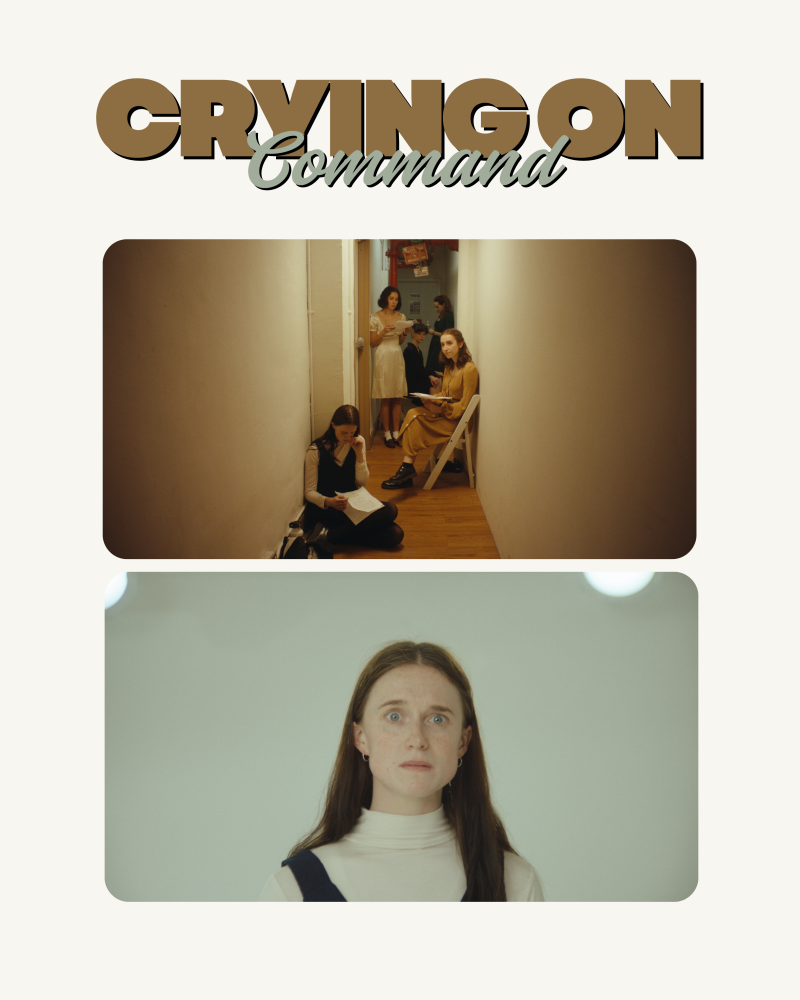
At what point does the art of performance end, and the terrifying reality of our own perceived inadequacy begin? Every artist, at some stage, wrestles with the quiet, gnawing fear that beneath their carefully honed craft, they might just be fundamentally hollow. In Nick Craven’s tightly wound thirteen-minute drama, "Crying on Command," this universal dread is distilled into a single, agonizing room.
The film operates not merely as a glimpse into the grueling mechanics of the entertainment industry, but as a profound microcosm for anyone who has ever felt their mind and body fall entirely out of sync at the exact moment their future depended on it.
Craven introduces us to Jordyn—played with a raw, almost uncomfortable authenticity by Nancy Kimball—at the apex of a monumental breakthrough. The part she is auditioning for is essentially hers, secured by a flawless table read and undeniable talent. Yet, the final hurdle is a seemingly simple, yet cruelly arbitrary request from her director: she must produce a tear. What follows is not a melodramatic breakdown, but a profound internal collapse. Craven brilliantly strips away all cinematic excess to highlight this paralysis. Utilizing minimalist soundscapes, sterile white walls, and echoing silence, he frames Jordyn less like a respected artist at work and more like a laboratory subject trapped under a microscope. Through mysterious, deliberate framing devices, we are forced to experience the intense claustrophobia of the gaze upon her, feeling the sheer weight of expectation pressing down in a room entirely devoid of warmth.
Kimball’s performance is a marvel of internalized panic. She captures that specific, suffocating desperation where the intense desire to succeed actively sabotages the physiological ability to do so. As Jordyn frantically searches for an emotion that has suddenly evaporated, her struggle transcends the immediate context of a casting call. Having navigated the bruising realities of the creative world myself—the relentless cycle of rejection, the fleeting triumphs, and the necessity of building a sturdy internal armor just to survive the day-to-day—I found Jordyn’s crisis uncomfortably familiar. Life has a peculiar way of suddenly stripping away the protective worlds we build for ourselves, backing us into corners where our deepest insecurities are laid bare. Jordyn is forced to confront the ultimate terror: Are we actually good enough? Or have we just spent our lives becoming exceptionally skilled at convincing ourselves that we are?
Craven, whose own lineage is deeply rooted in the acting profession, understands this fragile ecosystem intimately. He knows that the industry's inherent struggle is endlessly romanticized from the outside, yet deeply confusing and quietly destructive from within. Rather than indulging in the familiar, tired clichés of the "starving artist," he opts for a clinical visual literacy that turns the camera into an unblinking interrogator. "Crying on Command" is a sensational, deeply empathetic slice of life that lingers long after its brief runtime expires. It is a stirring reminder that our greatest obstacles are rarely the closed doors ahead of us, but the sudden, terrifying voids we discover within ourselves.
Add comment
Comments