Halfway Haunted - Samuel Rudykoff | Genre: Comedy/Horror | Runtime: 17 Minutes
Logline: A tenant in a haunted house teams up with a ghost to stop a real estate developer from demolishing their shared home.
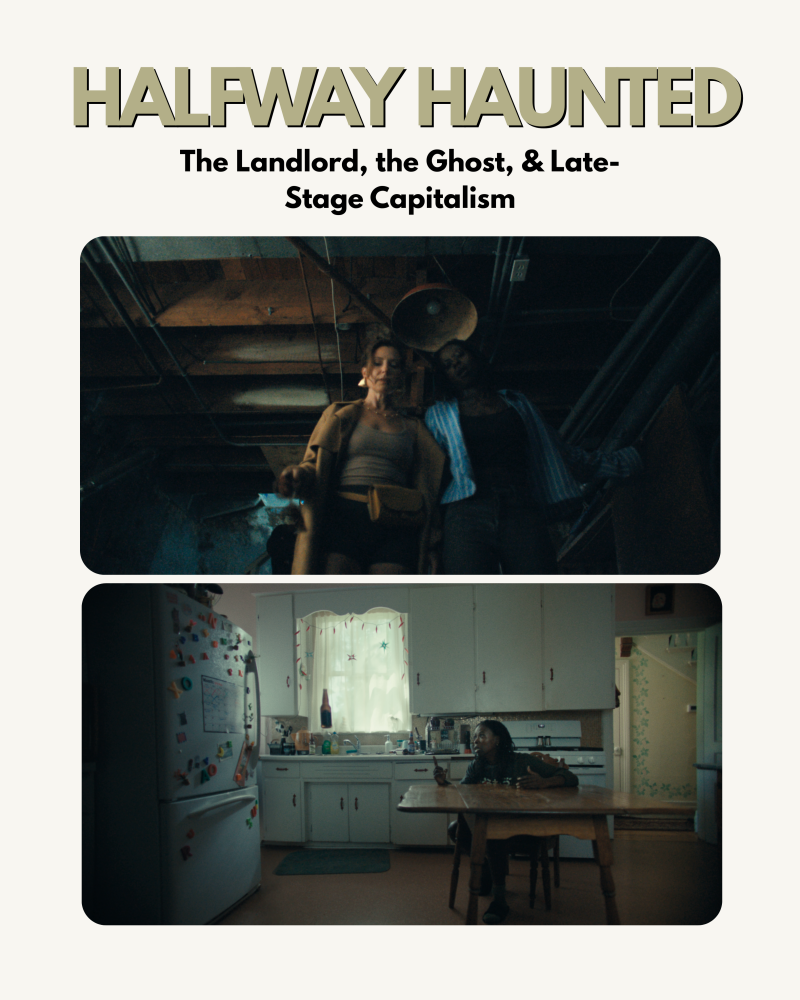
What if the walls of a condemned apartment remembered everything—every muttered panic over rising rent, every suspended argument, every ghost of a life half-lived before the lease is even up. In "Halfway Haunted," director Samuel Rudykoff does not merely visit that architecture of decay; he populates it with a riotous, melancholic vitality that turns the sheer indignity of housing insecurity into a ghost story worth fighting for. Co-written by Rudykoff and Bryn Pottie, this seventeen-minute tightrope walk of a film begins as a satirical riff on supernatural tropes before mutating into something far darker, stranger, and thrillingly unpredictable.
At its core is Hannan Younis as Jess, whose performance is anchored by a bone-deep, unyielding exhaustion. Younis plays Jess not as a terrified victim of the paranormal, but as someone so thoroughly overextended by modern existence that a haunting registers as just another administrative nuisance to manage. When she discovers that her ghostly roommate—played with magnificent, seen-it-all nonchalance by Kristian Bruun—is less a poltergeist and more a kindred spirit stuck in the same bureaucratic purgatory, the film pivots into an absurd, touching alliance. Bruun is a masterclass in deadpan cool, embodying an afterlife defined by solidarity rather than scares.
Yet the true terror of the piece doesn't crawl out of the floorboards; it arrives wearing a designer suit and an unyielding, predatory smile. Sugar Lyn Beard’s Stephanie is a masterwork of satirical villainy, a real estate developer whose weaponized perkiness and soul-sucking gentrification agenda are infinitely more chilling than any specter. Beard maneuvers through the narrative with a terrifying duality, entirely convinced that stripping away a community's history is an act of civic benevolence.
Visually, Peter Schnobb’s cinematography rejects any glossy, high-budget sheen in favor of a bruised, faltering interior twilight. The frame is choked with dust, deep shadows, and cheap lighting that makes the shared home feel thoroughly abandoned by the world long before the developers ever set foot in the hallway, grounding the surreal narrative in a tactile, desperate reality.
What elevates this short to the peak of its powers is how the script weaponizes its genre shifts. Every unexpected narrative pivot deepens a sharper metaphor about memory, trauma, and resistance, culminating in a twist that upends the premise entirely. Within a tightly measured seventeen minutes, Rudykoff achieves a remarkable narrative economy, delivering a compact, politically charged, and deeply human scream into the void of late-stage capitalism. It’s a work that refuses to play nice, weaponizing sarcasm and rage to remind us what happens when a community is left behind by the system long before the bulldozers arrive.
Add comment
Comments