Fadeaway - Brendan Prost | Genre: Drama | Runtime: 13 Minutes
Logline: In the quiet wake of a stranger’s overdose, a closeted man returns to the suffocating confines of his own life, where every touch from his partner becomes a haunting reminder of a vital connection he sacrificed to shame.
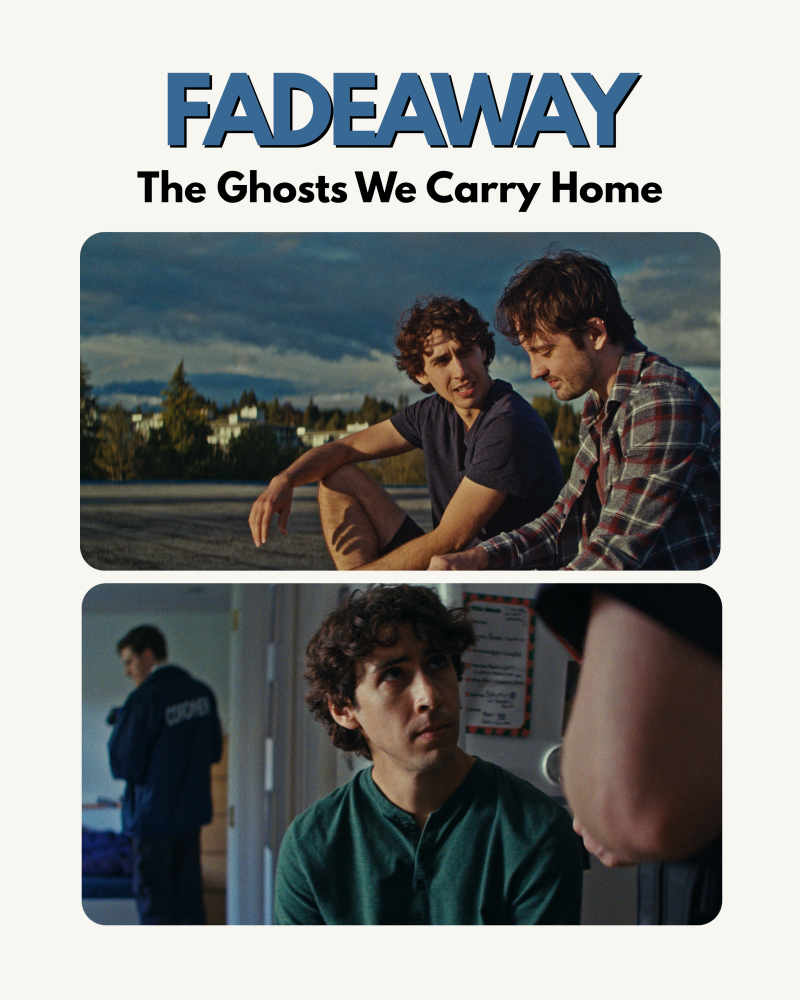
What is a life lived half-seen, where every touch carries the phantom weight of an unspoken truth? Brendan Prost’s thirteen-minute micro-budget drama "Fadeaway" captures that exact, fragile space where desire intersects with quiet, lingering isolation. The film opens with the mundane urgency of a hookup text—a digital prompt pulling a closeted bisexual man named Riley across East Vancouver, only to land him in a horrifying situation that would kick-start the unravelling of his entire sense of self: the man he was coming to meet, Felix, dead from an overdose. In Ryan Flowers’s wide 2.40:1 frame, rendered in crisp color on a shoestring canvas, the domestic space becomes a quiet vault of unlived potential, stripping tragedy of melodrama to expose a raw, everyday alienation.
When Riley retreats from that grim threshold back to his own apartment, he must instantly bury the morbid weight of what he has just witnessed, stepping straight into the complicated, fragile dynamic with his girlfriend, Ellie. Faced with her presence, he finds himself navigating an impossible emotional tightrope—suppressing a staggering grief while caught in the crosscurrents of domestic intimacy. When Ellie initiates physical touch to soothe Riley, the film performs its most devastating sleight of hand: proximity becomes an echo chamber rather than a refuge. Instead of grounding Riley in the present, her touch acts as a conduit back to Felix, pulling him toward memories of their earliest encounters—fleeting, vital sparks of genuine connection that had once offered an anchor, only to be systematically dismantled by the corrosive weight of shame and self-denial.
Prost’s direction, supported by a compact ensemble featuring Riley Davis, Matt Dejanovic, and Sydney Eberwein, refuses easy answers or moralizing safety nets. The narrative moves like a slow-motion unraveling, tracing how systemic pressures—heteronormativity, toxic masculinity, and the quiet internal policing of desire—converge to isolate men even when they are standing right next to each other. "Fadeaway" captures the peculiar, haunting melancholy of a missed harbor, treating a fleeting, failed connection not as a minor footnote, but as a ghost light warning of a dark, lonely future. It is a piercing, beautifully realized lament that lingers long after the screen goes black, cementing itself as a vital micro-budget achievement driven by uncompromising emotional truth.
Add comment
Comments