Wasted Seed - Nino Mancuso | Genre: Drama | Runtime: 17 Minutes
Logline: A devastating, unvarnished look at a couple whose desperate bid to start a family threatens to erase everything they built together.
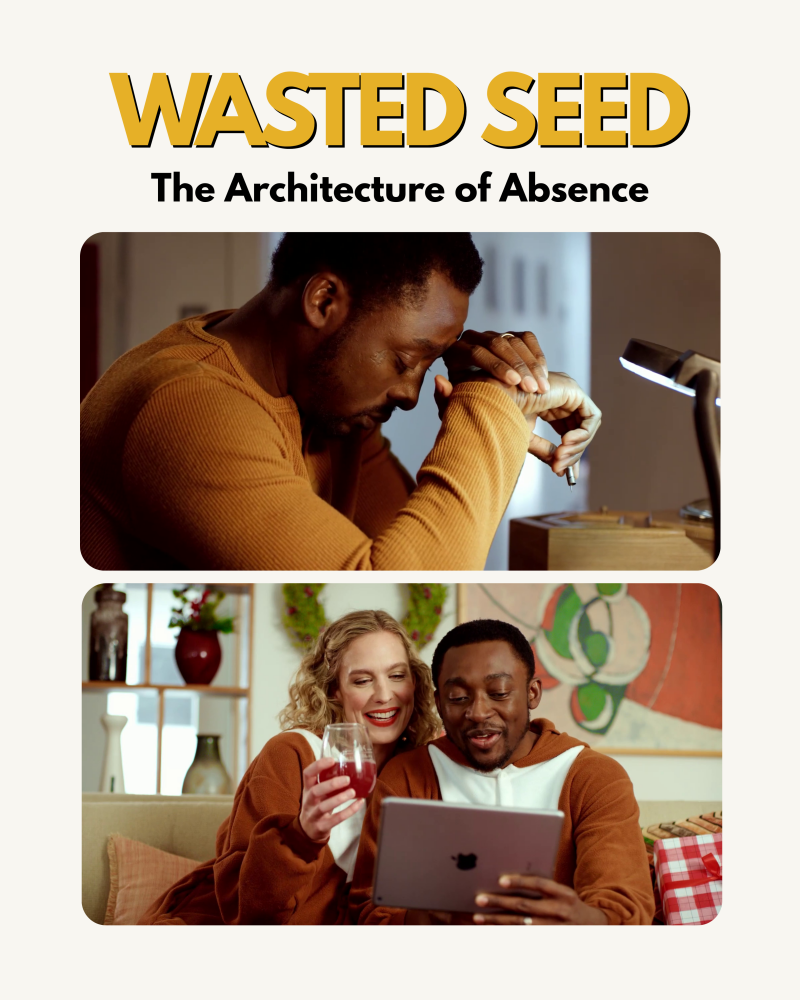
Most cinematic portraits of marital crisis depend on a loud explosion—an affair, a sudden loss, a shattering confession. But some of the deepest fractures in a life happen in absolute silence, measured out over years in negative pregnancy tests and the slow, heavy accumulation of unfulfilled expectation. In Nino Mancuso’s seventeen-minute drama "Wasted Seed," that silent erosion is examined with an unsparing, melancholic clarity that gives it a raw melancholic honesty.
Emma and Ethan possess every outward marker of an enviable life. They share a meticulously curated home, a secure foundation, and a mutual affection forged over years. Yet every room in their house is subtly overshadowed by an absence that cannot be named or negotiated with. Written by Turner and DeNah Angel and drawn from producer Helen Kennedy Turner’s own grueling eight-year journey with infertility, the film avoids the sanitized, melodramatic tropes that so often plague screen depictions of reproductive struggle. Instead, it anchors itself in the grinding, unglamorous mechanics of modern fertility treatments.
Mancuso captures the strange indignity of turning the most intimate parts of human existence into a clinical project. Spontaneity is systematically replaced by ovulation calendars, temperature charts, and sterile medical appointments where hope is doled out in percentages and blood counts. What makes the film so emotionally devastating is how it tracks the subtle shifting of dynamics between Emma and Ethan. The body becomes a battleground, and every failed cycle feels less like a medical setback and more like a quiet eviction from the future they had mapped out together.
Yet, the short refuses to reduce its characters to passive vessels of grief. There is a deeply authentic texture to their interactions—flashes of gallows humor, exhausted tenderness, and the desperate, unspoken pact to keep holding onto one another even as the ground beneath them liquefies. They are two people standing on opposite sides of an invisible chasm, trying desperately to reach across without pulling each other in.
In seventeen minutes, "Wasted Seed" achieves a profound emotional weight. It does not offer tidy redemptive arcs or comforting platures. Instead, it lingers in the uncomfortable, bruised space between love and longing, asking a question that stays with you long after the credits fade: when the thing you desire most requires you to dismantle yourselves to achieve it, how much of your marriage can you sacrifice before there is nothing left to hold?
Add comment
Comments