Bunny Rabbit - James Branson | Genre: Horror | Runtime: 90 Minutes
Logline: In the aftermath of a climate apocalypse, a young woman roams the ruins of a world she never got to grow up in. Supplies are scarce and food is running out. There's nothing left to hunt. Nothing except other people.
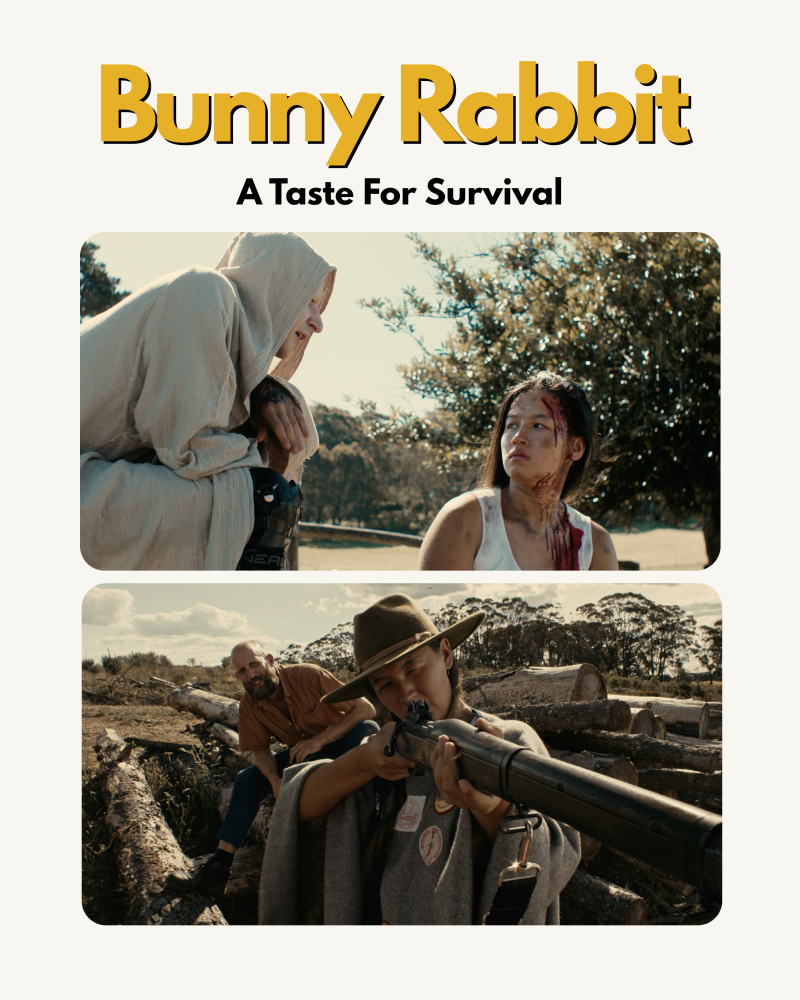
Nostalgia is a luxury usually reserved for those who actually got to experience the past. For the feral, ruthlessly pragmatic protagonist of James Branson’s "Bunny Rabbit," the old world only exists as magnetic distortion on a stash of decaying VHS tapes. She watches them in a rotting shack, waiting out a climate collapse that has already baked the earth to a crisp. We have seen the cinematic apocalypse packaged in countless ways, typically populated by leather-clad warlords or mutated zombies. Branson offers something far more insidious, yet intimately recognizable: the slow, gnawing math of absolute starvation, framed with the golden-hour poetry of a Terrence Malick fever dream.
Kate Wilson commands the screen as Bunny, a girl who missed out on the luxury of a childhood. She doesn't waste time grieving the dead ecosystem; she just figures out how to digest what's left of it. Her performance is thrillingly devoid of vanity. She moves with the twitchy, energy-conserving lethargy of a predator between meals, anchoring the film’s increasingly grim reality in pure physical instinct. Left entirely to her own devices after the loss of her father—who haunts the narrative in bittersweet, grounded memories played by country artist Andy Golledge—her routine of trapping and scavenging inevitably hits a brick wall. The local wildlife is gone. The caloric arithmetic of survival demands a menu change, and the only meat left walks on two legs.
This pivot to cannibalism is where Branson strikes a pitch-black, deeply cynical vein of comedy. There is no grand moral agonizing, no sweeping monologues about the sanctity of human life or the loss of our collective soul. It is simply a supply chain issue. The film positions this gruesome reality as the ultimate punchline to modern generational theft: the youth, inheriting a scorched, barren earth from their elders, are finally biting back. Literally.
The horror here relies on the severe whiplash between form and function. The sheer, sun-drenched beauty of the cinematography clashes violently with the grotesque, practical mechanics of hunting another human being. Bunny Rabbit lulls the viewer into a hypnotic, wind-swept trance, only to snap your neck with moments of sudden, unglamorous violence when Bunny is forced to engage with other desperate drifters.
If Branson’s debut stumbles, it is due to an unwavering, sometimes stubborn commitment to its own lethargic rhythm. The refusal to accelerate the plot means the brisk 90-minute runtime occasionally feels like a hike through deep mud. The isolation is undeniably palpable, but a few too many lingering, meditative shots of the desolate horizon threaten to numb the tension rather than tighten the screws, causing the middle act to sag under its own atmospheric weight.
Yet, the sheer audacity of the vision carries it through those slower stretches. "Bunny Rabbit" operates as a vicious, darkly funny fable about adaptation at the end of the line. It violently strips away the romanticism of the apocalypse, leaving behind a smart, nasty, and strangely gorgeous debut that asks one highly specific question: when the world finally burns to the ground, exactly what kind of appetite does it take to inherit the ashes?
7.8/10
Add comment
Comments