There's a sharp, lingering ache in looking back at the person you were before the world managed to shape your edges—that reckless, vibrating epoch of life where every mistake feels catastrophic and every passing emotion threatens to overwhelm you. Matt Johnson’s Tony taps directly into that universal vulnerability. Set during the sun-baked, salt-heavy summer of 1975 in Provincetown, Massachusetts, this is not a traditional biopic marching through a predictable checklist of future triumphs and eventual tragedies. Instead, it captures the nineteen-year-old Anthony Bourdain long before the television crews, the global fame, and the shadow of his final, heartbreaking choice could ever darken the horizon. It is a film about the clumsy, chaotic apprenticeship of simply learning how to exist.
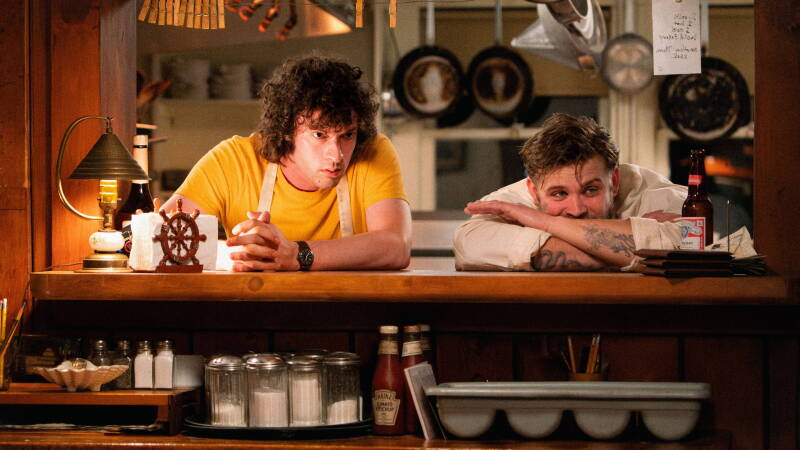
Dominic Sessa inhabits this younger self with a restless, defensive energy that feels piercingly authentic. He plays Tony not as an icon-in-waiting, but as a deeply insecure young man masking his terror of insignificance behind literary airs, poor judgment, and impulsive bravado. When he drifts into the sweltering, chaotic kitchen of The Flagship restaurant, taking a brutal job washing dishes under a seasoned crew, the film grounds itself in the messy reality of physical labor and human error. Johnson understands that character is rarely forged in grand moments of destiny; it is hammered out in the sweat, exhaustion, and repeated stumbles of youth. For every foolish decision Tony makes, there is a sharp, quiet moment of self-realization—a friction between action and reaction that slowly begins to construct the framework of who he will eventually become.
What elevates the film above standard coming-of-age cinema is its refusal to exploit the tragic destination of its subject. By choosing to focus entirely on the raw, unpolished genesis of a future storyteller, Johnson offers a bittersweet full-circle mirror to anyone who has ever looked at their own past with a mixture of fondness and disbelief. In the chaotic camaraderie of the line, among the misfits and burnouts of a working kitchen, Tony finds a spiritual home that gives shape to his inner noise. It is an affectionate, deeply melancholic ode to the paths that form us, honoring the messy journey of a life before it became a legend, and reminding us that our earliest wounds are often what teach us how to truly feel.
8.5/10
Add comment
Comments