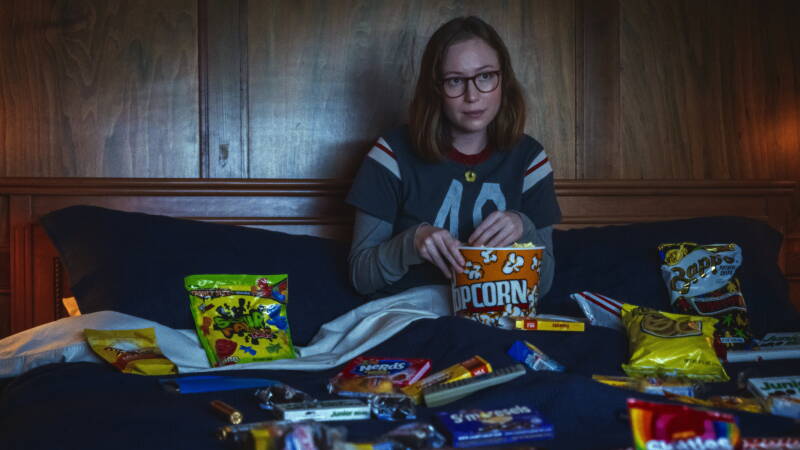
Horror cinema usually terrifies us with the prospect of our lives ending prematurely. Rarely does a film suggest a much quieter, far more devastating premise: that the person we were supposed to be is already gone, swallowed whole by the static and noise of an indifferent world. Jane Schoenbrun’s "Teenage Sex And Death At Camp Miasma" operates entirely in this uncomfortable territory. It's a film that uses the blood-soaked framework of the 1980s summer camp slasher not to count bodies, but to conduct an agonizing, necessary excavation of the self.
For decades, the slasher subgenre has communicated exactly who matters and who is disposable, famously relying on a steady conveyor belt of gorgeous, terrified blonde babes waiting to be dispatched in the dark. Schoenbrun weaponizes this cinematic history. By viewing the camp massacre through the lens of trans identity, the film sharply interrogates the genre's historical lack of diverse character archetypes. But Schoenbrun’s true achievement lies in how they translate the specific, deeply personal struggle of transition into a universal cinematic language of dysphoria.
The aesthetic execution alone is hypnotic. It feels as though a meticulously crafted, pastel-hued Wes Anderson diorama was recorded onto a VHS tape, its symmetrical beauty constantly threatening to drown beneath the heavy, buzzing cathode-ray static of a 1990s glass-screen television.
It's within this haunting visual space that the film’s thematic weight truly anchors itself. While rooted in the trans community's fight for visibility, the emotional frequencies of "Camp Miasma" are so raw that they transcend any single demographic. To watch it is to confront your own fractured identity. The film deeply understands this specific decade-long drift—the ache of feeling fundamentally unlovable, and the grueling effort required to retrieve the pieces of yourself you surrendered along the way. Dysphoria, in Schoenbrun’s hands, transcends its literal definition to encompass a broader, suffocating existential alienation. It's the terrifying sensation of looking in the mirror and realizing the person staring back has been lost for years. This isn't a sudden crisis; it is a quiet, festering void that takes root long before the noise of adulthood takes over. When you spend your life convinced you are unworthy of affection, you build walls so thick that you forget how to let anyone in. "Camp Miasma" masterfully articulates this grueling archaeology of the soul—the terrifying effort of digging through the static of your own history to find a self you aren't even sure you know how to love anymore.
This collision of horror and heartbreak crystallizes in the picture's undisputed masterstroke: an extended sequence where we are placed firmly behind the eyes of the killer, Little Death. As they stalk through the camp slaughtering everyone in their path, Schoenbrun strips away the expected, pulse-pounding tension of the genre. Instead, the massacre unfolds to the melancholic, piano-driven strains of Counting Crows’ "A Long December."
It's a breathtaking, introspective subversion of cinematic violence. The visceral thrill of the slasher is entirely muted by an ambient, simmering sadness. As an audience, you are caught in a devastating emotional duality—your inner horror fan is blown away by the sheer artistic audacity of the sequence, while the rest of you is crushed by the weight of the killer's pain, suddenly understanding the profound isolation that forged such a formidable slayer.
"Teenage Sex And Death At Camp Miasma" operates like a ghost trapped in the tracking lines of an old videotape, leaving us with one lingering, devastating piece of dialogue: "If it gets too real, you can always turn it off." It's a line that cuts straight to the bone of anyone who has spent their life pushing intimacy away. We keep our fingers hovering over the power button, terrified of being perceived, because turning the world off is always easier than allowing ourselves to be genuinely loved. Schoenbrun’s triumph is that they craft a nightmare so beautiful and achingly human, you refuse to look away.
8.5/10
Add comment
Comments