If your fiancée confessed, over a nice bottle of Malbec, that she once spent a humid teenage summer mapping out the most efficient way to murder her entire class, would you appreciate the radical honesty, or would you start wondering why your wedding registry includes a set of professional-grade steak knives? It's the kind of question that Kristoffer Borgli doesn’t just pose; he staples it to your forehead and asks you to look in the mirror.
In "The Drama," Borgli proves once again that he is cinema’s premier architect of the social panic attack. If his previous work flirted with the boundaries of ego and notoriety, this film leaps headlong into a psychological abyss, taking the vulnerabilities we're told to embrace in therapy and turning them into self-destructive nuclear warheads aimed directly at the soul. He has a particular, almost cruel gift for taking a character’s darkest, most private anxiety and weaponizing it until the air in the theater feels too thin to breathe.
The casting of Zendaya is a masterstroke of meta-textual arson. For an actor whose career began in the sun-drenched, Disney-esque safety of the public eye—a young woman seen by millions as a pillar of poise and relatability—to inhabit Emma is a calculated subversion. When she admits, with a terrifyingly grounded casualness during a drunken game of confessions, that she once planned a mass shooting at her college, the impact isn't just felt by the characters on screen; it's felt by an audience that has been conditioned to adore her. By placing that specific, radioactive history behind her eyes, Borgli exploits our parasocial affection to create a unique brand of existential vertigo.
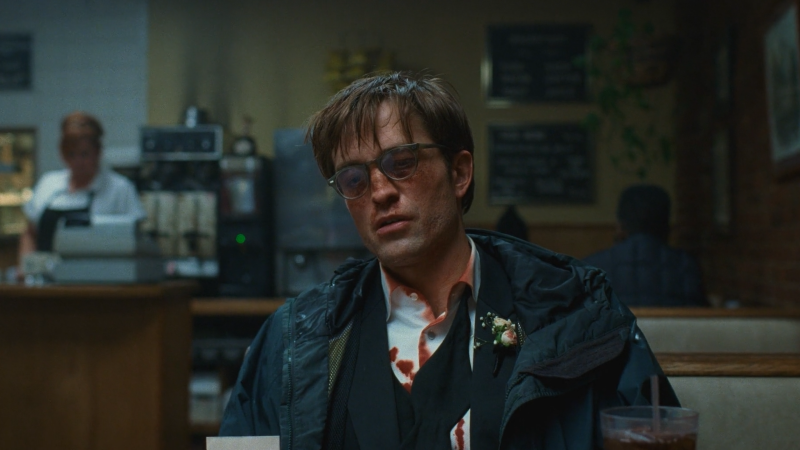
But the brilliance of the film lies in the fact that this insane confession isn't the actual catalyst of the destruction—it's merely the pin in a dodgy grenade that refuses to go off instantly. The true brutality is found in the savage dismantling of the nice person facade. Robert Pattinson’s Charlie acts as a proxy for the viewer’s own wavering autonomy. We want to judge him for his growing paranoia, but we are forced to admit that his reactions are, on some primal level, justified. He's a man trying to reconcile the woman he loves with a ghost capable of unfathomable violence, and his subsequent unravelling is a clinical study in how quickly human niceties evaporate when self-preservation kicks in.
Borgli doesn’t care about the optics of "the good person." He's interested in the selfish, egotistical, and often pathetic ways we navigate a truth that invalidates our reality. The film suggests that in the modern world, we aren't actually looking for honesty; we are looking for a version of the truth that doesn't make us look bad in the wedding photos. As the relationship between Emma and Charlie begins to erode, "The Drama" strips away the performative layers of modern empathy to reveal a jagged core. It's a thrilling, no-holds-barred look at the human condition that leaves you wondering exactly how much of your partner's soul you actually want to see.
8.5/10
Add comment
Comments