This Conversation Has Been Removed - Andrew Nolan | Runtime: 7 Minutes | Genre: Dramedy
LOGLINE: When Peter and Jill engage in an online flame war, they learn just how wrong "making it personal" can go.
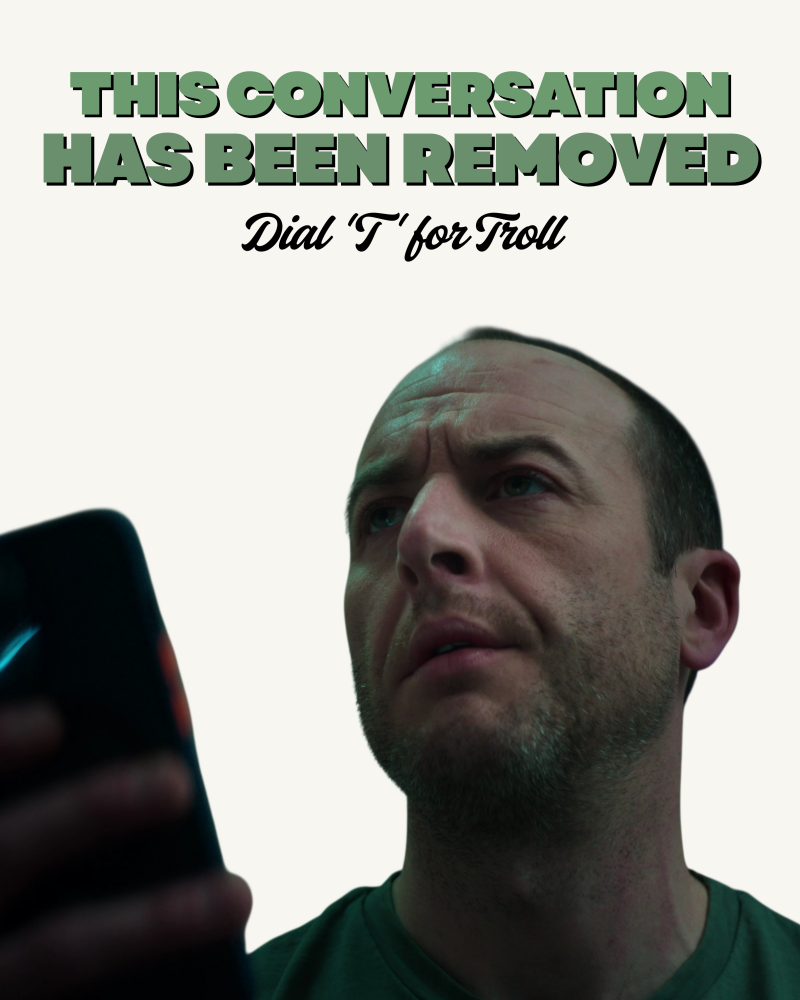
We have all, at one point or another, sat in the dark, furiously hammering out a self-righteous manifesto to a faceless digital avatar who is utterly, unforgivably wrong. Andrew Nolan’s "This Conversation Has Been Removed" takes this exhausting modern ritual and twists it into a pitch-black, seven-minute farce. The premise is brilliantly cruel: two people locked in a ferocious, escalating online flame war, entirely oblivious to the fact that the ideological monster they're trying to destroy is actually the person sitting just across from them. It weaponizes the familiar exhaustion of our current culture-war discourse—where everyone is either an alt-right antichrist or a blue-pilled snowflake—and spins it into a highly combustible comedy of errors.
The true genius of the piece lies in its formal audacity. Screenwriter Mark Hennigan strips away verbal dialogue entirely, resurrecting the frantic, physical anxiety of a classic silent comedy routine and retrofitting it for the broadband era. In a society that never stops generating noise, the choice to render the characters utterly mute in physical reality is a masterstroke. Their entire vocal existence is poured into the suffocating void of a comment section. It’s a conceptual gag that immediately thrusts the audience into the absurdity of the situation without a single drop of clunky exposition, forcing us to watch them type, seethe, delete, and type again in a silent pantomime of modern rage.
Without the crutch of a spoken monologue, the film’s emotional weight rests squarely on the facial muscles of its leads, Stevie Martin and Simon Ashe Browne. Both actors deliver wildly impressive, micro-calibrated performances that prove you don't need words to telegraph a total psychological meltdown. We watch Jill’s eyes widen with sanctimonious disbelief and Peter’s jaw clench in frantic paranoia, their faces illuminated only by the unforgiving glare of their devices.
Yet, if this tightly wound machine has a vulnerability, it's the inescapable reality of its own brevity. At a lean seven minutes, the momentum is undeniably electric, but it charges toward its conclusion with such breakneck velocity that the broader psychological bruises of its premise are left relatively unexplored. The commentary on our fragmented communication is incisive, but it operates more as a highly effective drive-by shooting than a deep, lingering interrogation of the societal rot.
Despite leaving you wishing for just a bit more room to breathe, the film hits its target with terrifying precision. The conclusion arrives abruptly, but its execution is profoundly clever, wrapping the central themes into a punchline that stings because it feels so uncomfortably familiar. Nolan has crafted a wildly engaging, razor-sharp satire that takes the abstract concept of algorithmic polarization and distills it into an intimate, intensely awkward tragedy. It stands as a brilliantly constructed reminder that the faceless enemies we fight so passionately online are often just reflections of our own fractured humanity.
Add comment
Comments