Julian Papas - It Happened At 1:03 | Runtime: 13 Minutes | Genre: Drama
Logline: Dismissed from his dying father's hospital bedside to wait out the inevitable, a young man's silent midnight journey home descends into creeping paranoia when a phantom stranger haunts his periphery.
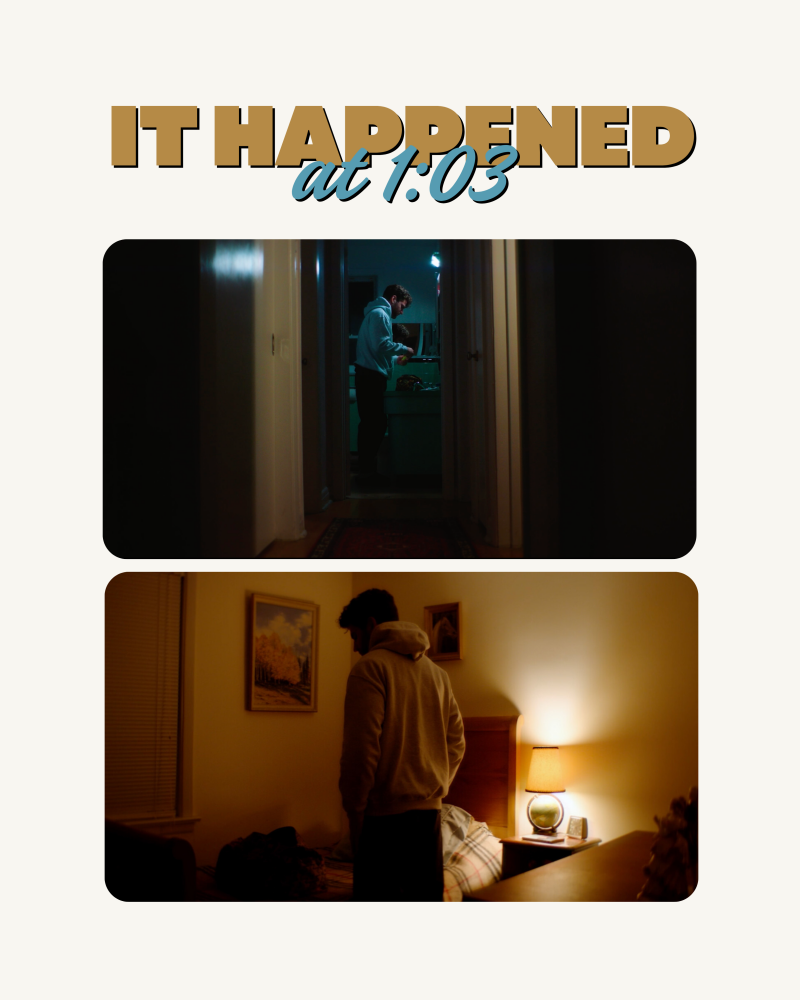
Julian Papas’s "It Happened At 1:03" is an exercise in the excruciating waiting game that accompanies impending loss. There is a specific, suffocating purgatory in being told by a hospital nurse to go home and get some rest while a parent fades away in the next room. Papas smartly anchors his short film in this exact moment, replacing the typical histrionics of cinematic grief with an absolute, punishing silence. The film is almost entirely wordless, forcing the audience to navigate the dead of night alongside a man whose world is quietly ending off-screen.
Bereavement has a darkly funny way of making paranoiacs of us all, and the film weaponizes this psychological quirk by framing a solitary drive home as a creeping thriller. When the mind is utterly incapable of processing an existential void, it tends to invent immediate, physical threats to fill the gap. Papas uses the isolating geometry of a car's interior and a desolate night to build a mounting, irrational dread. Glimpses of a shadowy figure standing in the dark—always vanishing upon a second glance—blur the line between a traditional stalker setup and the fractured headspace of a man whose reality is actively collapsing.
This tension bleeds seamlessly into the domestic sphere, where the film finds its most poignant, absurd truths. There is something inherently macabre about standing at a kitchen sink washing dishes while waiting for your life to permanently alter. Yet, this is exactly where the narrative grounds itself. By focusing on the agonizingly mundane rituals that persist even as tragedy looms, the director highlights the sheer, physical weight of a home’s sudden emptiness. The creeping dread of what might be lurking outside the window becomes entirely secondary to the paralyzing stillness inside the house.
Ultimately, "It Happened At 1:03" succeeds because it trusts the architecture of absence over cheap exposition. It captures the heavy, lingering static of the spaces our loved ones occupy—the living room routines, the favorite armchairs—and the brutal realization of having to say goodbye to them. While its ruthlessly minimalist approach leaves a bit less meat on the bone, it remains a highly effective, tightly wound study of anticipatory grief. Papas delivers a haunting reminder that sometimes the most terrifying thing in the dead of night is simply the space where someone used to be.
Add comment
Comments