Apricot - Frank Frascella | Runtime: 28 Minutes | Genre: Culinary Drama
My latest review dives deep into "Apricot," a visceral culinary drama by Frank Frascella. It’s more than just a look inside a Michelin-star kitchen—it’s a raw exploration of gatekeeping, grit, and the moment an artist stops asking for permission and starts claiming their seat at the table.
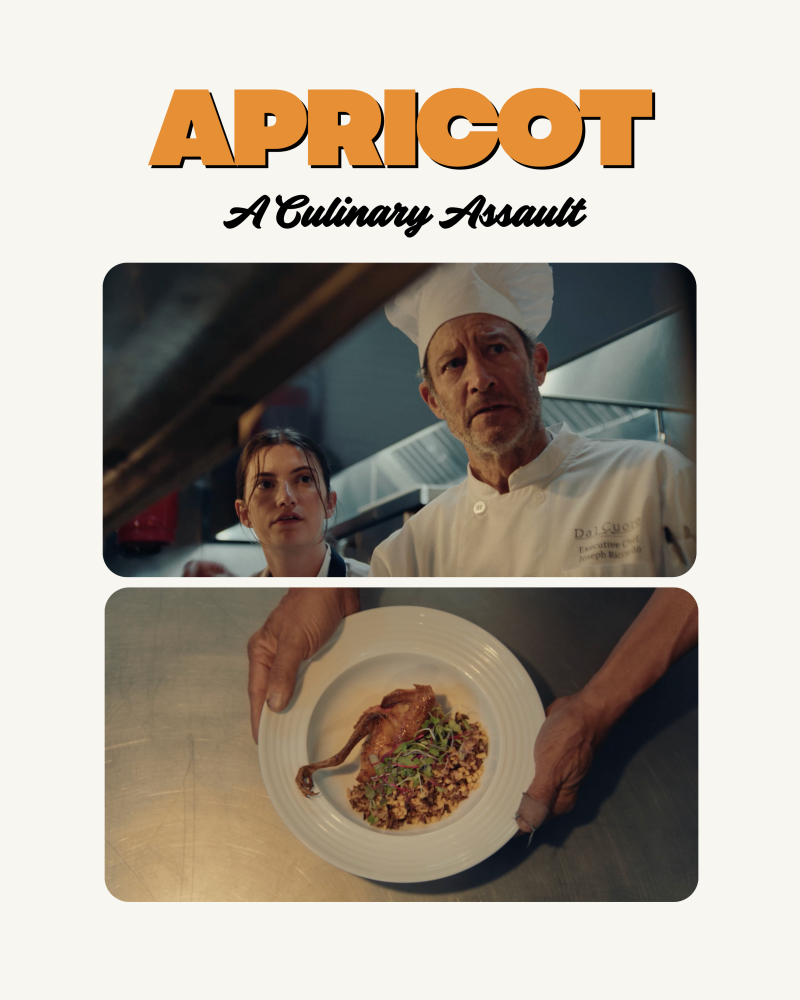
How much of ourselves are we willing to incinerate in the heat of someone else's legacy before we realize that the fire was always ours to control? This is the silent, simmering question at the center of Frank Frascella’s "Apricot," a culinary drama that bypasses the glossy, televised tropes of the professional kitchen to deliver something far more visceral and psychologically taxing.
Set within the claustrophobic, high-stakes environment of ‘Dal Coure’—a Los Angeles institution teetering on the edge of losing its Michelin star—the film is less about the food on the plate and more about the marrow of the people who put it there. We follow Rose, a young chef whose technical brilliance is frequently overshadowed by the suffocating gatekeeping of an industry that often values stoicism over soul.
From the opening frames, there is a tactile, almost documentary-like urgency to the cinematography that makes the air feel thick with the scent of reduced stocks and nervous sweat. You don't just watch the service; you endure it. The narrative tension is anchored by the arrival of a Michelin inspector, a looming threat that transforms the kitchen from a place of creation into a battlefield of desperation. As Rose seeks to claim her rightful place in the hierarchy, she is met with the militant rigidity of Head Chef Riccardo, a man whose leadership style is a relic of an era defined by fear rather than inspiration. When a botched delivery forces a pivot, Rose is thrown into a competitive crucible alongside her peer, Ajax, tasked with creating a dish that might save the restaurant’s reputation.
What distinguishes "Apricot" from other entries in the "kitchen-noir" subgenre is its commitment to authenticity—not just in the choreography of the line, but in the subtextual language of the food itself. The dishes aren't merely props; they are extensions of the chefs' conflicting ideologies.
Rose’s contributions represent a shift toward artistry and heart, a stark contrast to the sterile, fading grandeur of Dal Coure’s existing menu. The film masterfully captures that universal, bone-deep exhaustion common to any high-pressure industry—be it film or food—where the mantra is simply to "make the day." Yet, Rose’s journey is one of refusal; she refuses to let the chaos harden her into a nihilist. She navigates the name-calling and the blistering pace not by stooping to the level of her mentors, but by rising above the noise with a quiet, defiant confidence.
"Apricot" is an introspective study of the moment an artist decides to stop asking for permission. It captures the terrifying beauty of the "worst night of service" and transforms it into a rite of passage.
It reminds us that while the gatekeepers may hold the keys, they do not own the craft. By the time the final ticket is stabbed and the burners are turned low, the film leaves you with the profound realization that momentum isn't something granted by a superior—it is something forged in the heat of your own conviction. It is a rare short film that manages to feel both incredibly specific to the culinary world and deeply relatable to anyone who has ever had to fight for their seat at a table that wasn't laid for them.
Add comment
Comments