The Caretaker - Luke Tedder | Genre: Horror/Thriller | Runtime: 114 Minutes | Rated R
Synopsis: The Caretaker is a character-driven horror-thriller set at Lockbridge Academy, an isolated school on the coast, run by the powerful aristocratic Aberdeen family. Eddie is a mute, burdened with caring for his cruel ailing mother. While on the cusp of losing his home, he takes a caretaker position at Lockbridge. There, he meets a cleaner named Marie, sparking a connection that will alter the trajectory of his life, while unraveling a sinister mystery lurking within the school, that could shatter the Aberdeen's family legacy forever.
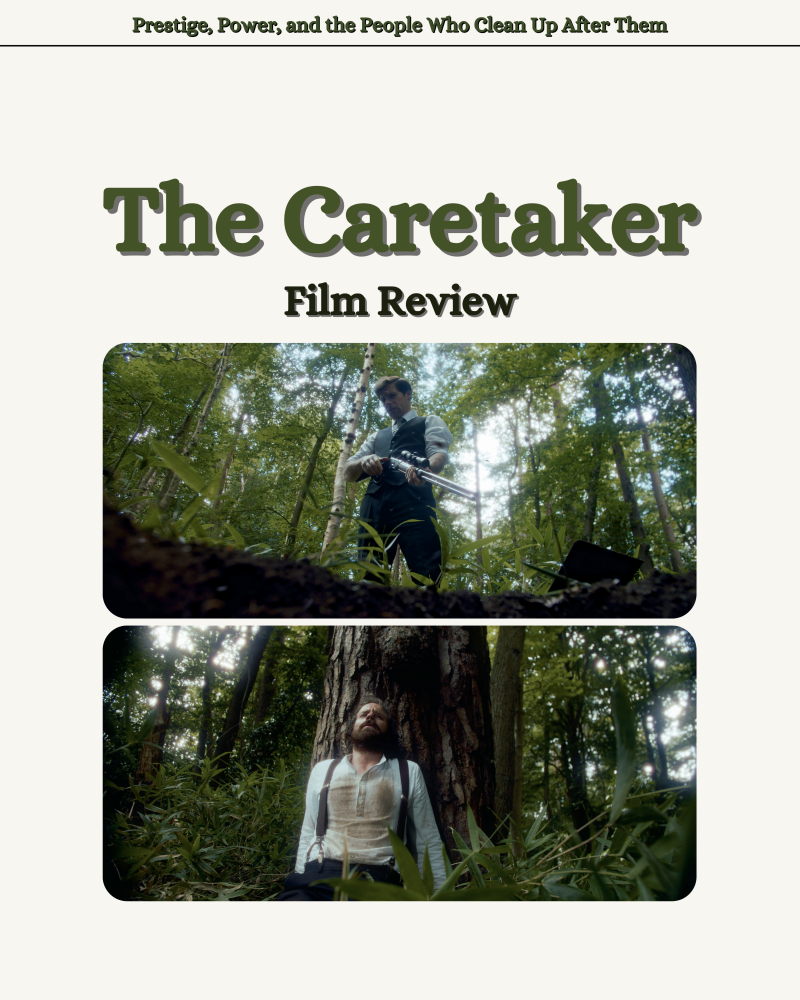
Some films announce their intentions with noise. "The Caretaker" does the opposite. It arrives already burdened, already tired, already carrying the emotional residue of a life lived in service to others, and it asks the viewer to meet it on those terms. From the first moments, the film feels less like a story being told and more like a space being entered—one shaped by loss, duty, and the quiet fear of becoming invisible. This is a horror film that understands how exhaustion can hollow a person out, how silence can calcify into identity, and how places built on prestige often conceal the most corrosive truths.
Eddie is not positioned as a traditional horror protagonist. He does not stumble into danger out of curiosity or bravado, but out of necessity. Having devoted himself to caring for a mother who offered cruelty instead of comfort, he enters Lockbridge Academy already stripped of agency, security, and voice. The film’s greatest strength lies in how seriously it takes this emotional starting point. Eddie’s muteness is never treated as an abstraction or a metaphor to be solved; it is simply part of who he is, shaping the way he navigates power, vulnerability, and connection. Ben Probert’s performance is remarkable precisely because it resists showmanship. His stillness invites scrutiny, asking the audience to read meaning into posture, breath, and fleeting expressions, creating an intimacy that dialogue-heavy scenes rarely achieve.
Lockbridge Academy is a masterfully realized environment, not because it is overtly frightening, but because it feels institutional in the most unsettling sense. Authority is embedded into the architecture, the routines, the inherited confidence of those who run the place. The Aberdeen family’s control is not maintained through constant threat, but through tradition, condescension, and the expectation of obedience. This gives the film a distinct social texture: the horror does not exist separately from class, legacy, and entitlement, but is deeply entangled with them. The school does not simply house secrets—it normalizes their concealment.
The relationship between Eddie and Marie offers a fragile counterbalance to this oppressive world. Their connection unfolds gently, defined by shared solitude rather than grand romantic gestures. It is in these quieter moments that the film reveals its emotional generosity. The Caretaker is deeply interested in how people recognize each other when stripped of status and expectation, how solidarity can form in the margins of spaces never designed to accommodate it. These scenes do not dilute the film’s dread; they sharpen it, because they give the audience something human to protect.
As a work of horror, the film is deliberate and disciplined. It uses familiar genre tools—unnerving imagery, unsettling presences, and carefully timed shocks—but never relies on them as a substitute for substance. The supernatural elements feel woven into the emotional fabric of the story rather than imposed upon it, reinforcing the idea that trauma does not simply disappear when ignored. The film’s pacing reflects this philosophy, allowing tension to accumulate through repetition, implication, and memory rather than constant escalation. By the time events begin to converge, the sense of unease feels earned, rooted in character and place rather than spectacle.
What makes this film particularly striking is how complete it feels. There is an unmistakable coherence to its vision, an attention to detail that suggests not just careful planning, but genuine emotional investment. The film never feels constrained by its independent nature; instead, its focus and restraint become part of its identity. Every choice appears in service of the same question: what happens to those who spend their lives maintaining systems that were never built to care for them?
By the time the film reaches its final moments, it has not offered easy answers or comforting resolutions. Instead, it leaves the viewer with a lingering awareness—of histories that refuse to stay buried, of institutions that outlive their victims, and of individuals who endure far more than they are ever thanked for. "The Caretaker" does not shout its themes or insist upon its importance. It simply stands there, patient and unyielding, asking you to sit with what remains when the lights go out and the corridors fall silent.
Add comment
Comments