Paradise: A Town Of Sinners And Saints - Justin Isaac Ward | Genre: A Bluegrass Musical Comedy | Runtime: 114 Minutes
Synopsis: In a fading Southern coal town where faith, fortune, and frustration intertwine, a hopeful young woman with big dreams finds her community electrified by the arrival of a charismatic outsider promising salvation through spectacle. As bluegrass rhythms carry laughter, temptation, and hard truths through the town, long-buried desires and conflicting motives rise to the surface, forcing everyone to confront the difference between believing in something—and believing in the right thing.
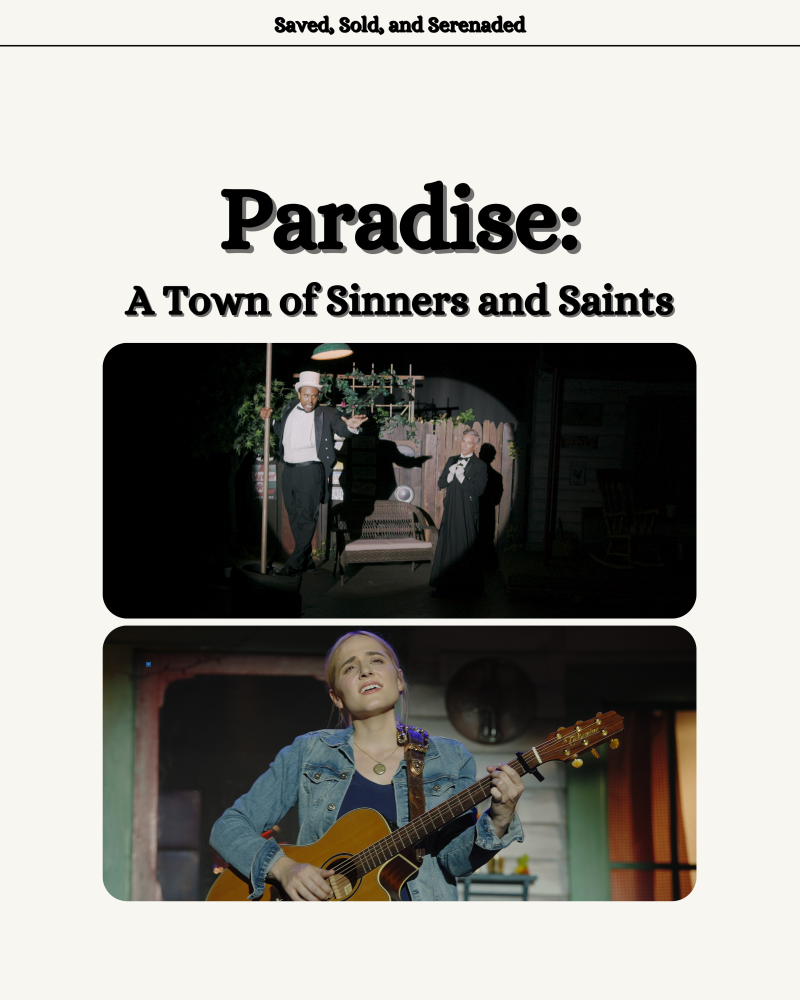
Promises are easy to make in places where hope is already running thin. What’s harder—and far more revealing—is what people do when those promises are wrapped in charm, music, and the seductive idea that salvation might finally be within reach. "Paradise: A Town of Sinners and Saints" leans into that fragile space between belief and doubt, using humor, harmony, and unapologetic theatricality to ask a quietly profound question: when the future is dangled before us, how do we know who is truly offering a way forward, and who is simply selling the illusion of one?
Set in a struggling Southern coal town, the film unfolds like a stage curtain rising rather than a traditional cinematic reveal, embracing its roots as a live musical while confidently translating that energy to the screen. Director and editor Justin Isaac Ward allows the story to breathe within this format, letting performances, lyrics, and ensemble dynamics drive the momentum instead of flashy location changes. The result feels intentional and intimate, as though the audience has been invited into a communal experience rather than a conventional film screening.
At its heart is Louanne, a young woman whose restlessness is neither naïve nor bitter, but deeply human. Her longing for something more—more meaning, more purpose, more color than her circumstances allow—grounds the film’s heightened satire in emotional sincerity. Mary Sarah brings an undeniable warmth to the role, pairing an effortlessly pure vocal presence with a natural charm that makes her aspirations feel earned rather than idealized. She becomes the emotional compass of the story, a reminder of what’s at stake when grand promises begin to eclipse personal truth.
Orbiting her is a cast of characters who are deliberately broad yet sharply observed, each embodying recognizable archetypes without losing their individuality. The arrival of a charismatic televangelist and his carefully curated entourage injects the town with spectacle, ambition, and unease in equal measure. Jon Root’s performance is knowingly extravagant, embracing excess as both comedy and commentary, while Raquel Castro’s scene-stealing confidence underscores the film’s willingness to blur lines between the sacred and the scandalous for satirical effect. These portrayals are not subtle, nor are they meant to be; they reflect a world where image often shouts louder than intention.
What elevates Paradise beyond mere provocation is its clear affection for the town and its people, even as it skewers them. The humor is fearless and frequently off-color, but it rarely feels cruel. Instead, it operates as a mirror—sometimes distorted, sometimes uncomfortably clear—held up to ideas of faith, fame, and the American Dream as filtered through desperation and desire. The film recognizes the vulnerability that makes people susceptible to manipulation, and it treats that vulnerability with a surprising degree of empathy.
Music is the lifeblood of the film, woven so seamlessly into the narrative that it feels less like interruption and more like confession. The bluegrass score pulses with authenticity, capturing both the grit and the joy of its setting. Songs swing effortlessly between heartfelt reflection and gleeful irreverence, often within the same breath. They entertain first, but they also reveal character, expose motives, and push the story forward with rhythmic confidence. Even when the lyrics flirt with shock value, they do so in service of a larger emotional and thematic truth.
"Paradise: A Town of Sinners and Saints" <span;>is not a film that aims to please everyone, and it knows that. Its comedy is bold, its themes are pointed, and its tone walks a deliberate line between affection and affront. Yet within that daring approach lies a sincere curiosity about redemption, accountability, and the cost of believing too easily—or not believing at all. By the time the music settles and the story finds its resolution, the film leaves behind more than laughter. It leaves an echoing thought: in a world full of grand gestures and louder-than-life promises, integrity may be the quietest—and rarest—melody of all.
Add comment
Comments